You start the path.
We walk part of it with you.
The crossing is always made alone. No one can make it for you. What we do: shed light, remove blockers, guide, keep the movement going.
We stay with you long enough for the movement to be underway. No longer. Our success is your autonomy.
Support builtaround your situation.
Getting acquainted
A first conversation helps us understand your situation, your expectations, and check whether I'm the right person to support you.
Setting the direction
We clarify what you want to achieve, the changes you expect, and the markers that will let us track your progress.
Crossing
Sessions alternate between discernment, shaping strategies and training. We always work from situations you're actually living. Between sessions, you try new ways of acting and observe their effects.
Taking it forward on your own
We consolidate what's been learned, measure the ground covered, and identify what will let you carry on without depending on the coach.
The pace, number of sessions and length of the program are set according to your situation. A session usually lasts between 60 and 90 minutes. Coaching can be funded directly by the individual or by their company.
See clearly
before you move!
A precise reading of the situation you're going through.
- One in-depth 2-hour video session
- A personalized 4-6 page document
- Your stakes, your room for maneuver and your blocking points
- A single next step, precisely defined
- No follow-up commitment
Cross!
A confidential space to step back, understand what's really going on, and prepare your actions — starting from your real situations.
- Individual sessions, 60 to 90 minutes
- Remote or in person, depending on circumstances
- Pace adapted to your situation
- Goals defined at the start of the coaching
- Exercises, experiments or rehearsals between sessions
- Confidentiality of all exchanges
A practice shapedby exploration and enterprise.
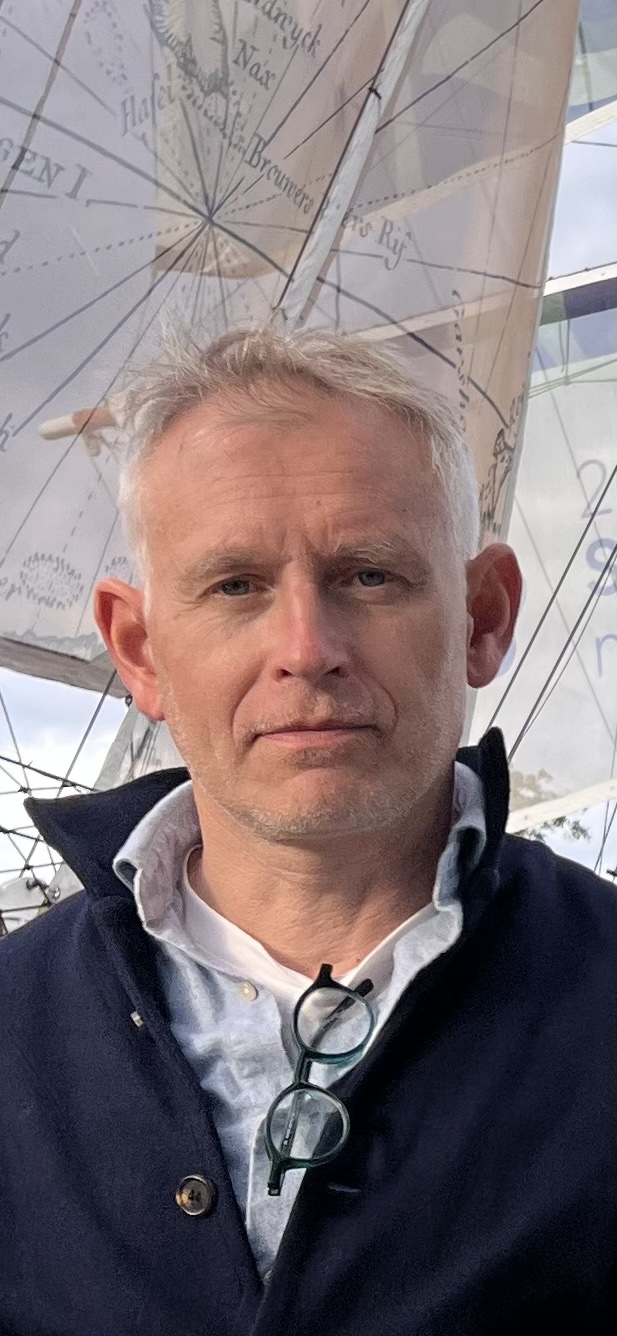
Serge Motton
I love exploring, experimenting and building.
I'm an entrepreneur and certified coach, specializing in human and organizational transformation. I'm also a sailor and a traveler. What these experiences share is a taste for exploration, for action, and for situations where you have to move forward without having every answer.
Over the past twenty-five years, I've been through many crossings of my own. I've led transformation projects, founded several companies, and coached managers and executives. I've also lived through personal changes, worked with more than ten different cultures, and lived in France, Spain and China.
These adventures opened me up to different environments, different ways of thinking, and different ways of connecting with people.
Alongside this, I've spent many years studying how people function: our fundamental needs, our emotions, our beliefs, our relationships, and the conditions that let a person grow and act.
All of these experiences have shaped a coaching approach that is both concrete and open.
It's this experience, combined with a sharpened eye, that I bring to those who've decided to change — to better understand people, themselves as much as others, to discern what's really at stake, to shape a strategy, and to train to put it into practice.
I don't hand you a ready-made route. I help you discern and trace your own.
Where are you in your crossing?
25 questions. 6 minutes. A personalized profile among 5 possible readings, sent immediately by email. Confidential.
Start the testHow is this different from a skills assessment?
A skills assessment mainly analyzes your experience, your abilities, your motivations and possible career directions. At TRAVERS-C, we don't inventory what you already know how to do. You already have the skills. We work with the person who has to put them to use: you. We explore how you read a situation, your needs, your representations, your relationships, your responsibilities and your capacity to act. The question isn't just "What can I do?" but also "How am I going to take my place and act in this situation?"
How is this different from a management training course?
A training course passes on knowledge and models designed for a group. Coaching starts from your specific situation. It helps you understand what's really at stake for you, choose a strategy, and train on your own real situations. The two can complement each other.
Is this consulting?
I can offer reference points and share a reading drawn from my own experience when it's useful. But I don't decide in your place. My role is to help you understand the situation, explore your options, make your own choices, and build your own capacity to act.
Do you need to have a problem to start coaching?
No. Taking on a new role, expanding your responsibilities, or leading a transformation can justify coaching before difficulties even appear. Coaching can be used to repair a situation, but also to prepare for a transition.
How many sessions should I plan for?
It depends on the situation and the goal. Some needs can be worked through in just a few sessions. A shift in posture or taking on a new role usually calls for coaching over several months. The format is defined after the first conversation.
Can my company fund the coaching?
Yes. When the company funds the coaching, the goals and framework are defined with everyone involved. The content of the sessions remains confidential.
Can sessions take place remotely?
Yes. Sessions can be held remotely, or in person when location and circumstances allow.
How do I know if you're the right coach for me?
That's exactly what the first conversation is for. Coaching requires a relationship of trust, but also the ability to work together in practice. If I don't think I'm the right person, I'll tell you.